
Molecular biomarkers from sedimentary archives to improve knowledge on agriculture and human impact: miliacine and dryness environmental conditions
Progetto finanziato dal Fondo di Ateneo per la Ricerca Anno 2020 – Progetti di Dipartimento
Responsabile/PI: Dr. Assunta Florenzano
Partecipanti/Participants: Eleonora Clò (dottoranda/PhD student)
Partners: Dr. Jérémy Jacob – LSCE (UMR CEA-CNRS-UVSQ 8212), France
Consulenti/Consultants: Dr. Marta Dal Corso, Dr. Marco Zanon – CAU Kiel; Prof. Carl Heron – British Museum
The project is part of a broader framework of research aiming at the understanding of ecosystem-climate-human interactions in a long-term diachronic perspective.
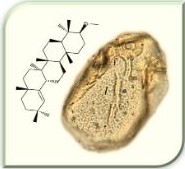
The main goal of the project is to improve the information provided by biological indicators from archaeological records, integrating biomolecular techniques and botanical skills. The study proposes to verify that the identification of miliacin (olean-18-en-3β-ol methyl ether), a pentacyclic triterpene methyl ether that is enriched in grains of common/broomcorn millet (Panicum miliaceum), in archaeological sediments is the unambiguous molecular evidence of millet cultivation.
Specific objectives of the project are: i) to verify the correspondence between miliacin content and Panicum pollen concentration in the near-site stratigraphic sequences of the Terramara S. Rosa di Poviglio (Po Plain, N Italy); ii) to obtain more precise information on the link between millet cultivation and aridification phases (water stress).